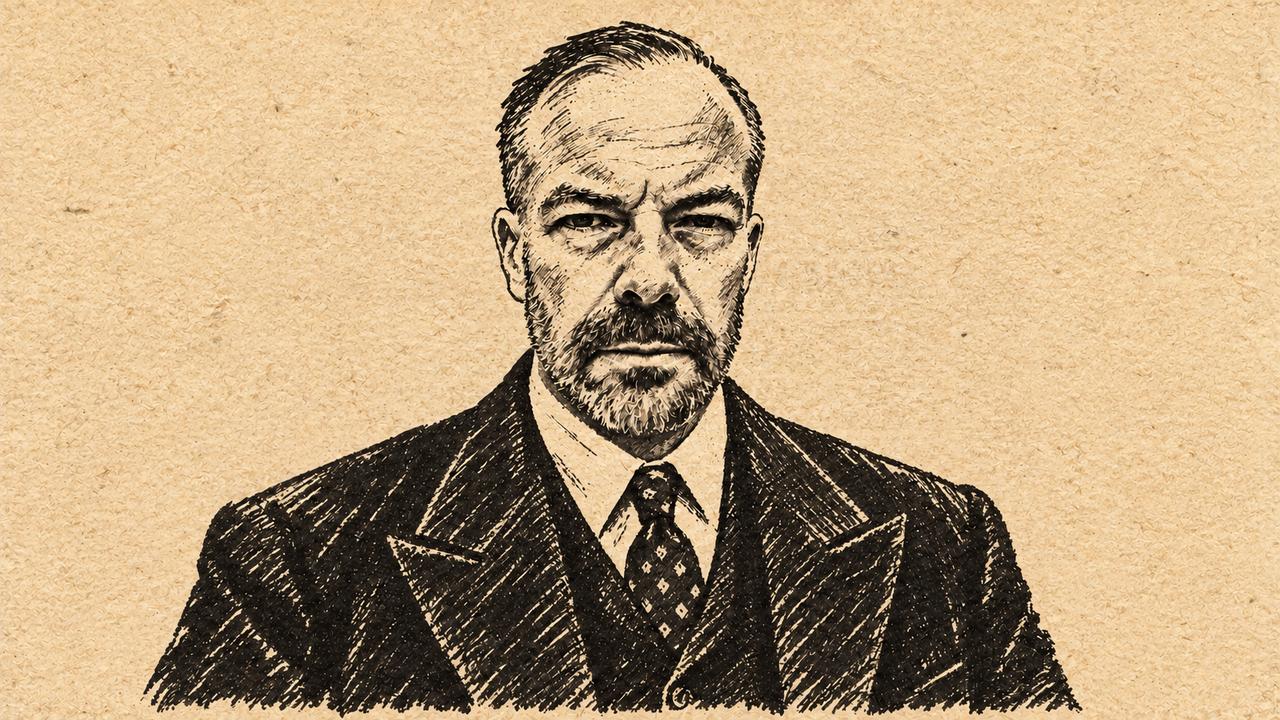
Mr. Simon Rumley occupies an unusual position in British cinema. His pictures examine human behaviour at its most desperate and disturbing, yet their force depends as much upon sympathy as upon horror. He asks us to look closely at people from whom we might otherwise turn away.
I have admired his work for many years. There is something singular about his willingness to pursue a character’s suffering beyond the point at which a more conventional picture might settle for an explanation, a punishment or a reassuring conclusion.
His films concern vulnerability, obsession and the occasional collapse of civilised behaviour. Such conditions are not entirely unfamiliar to this correspondent, particularly when a Saturday evening Just Eat order is delayed indefinitely, only for a telephone call to reveal that the restaurant has cancelled it altogether. But I digress.
Some viewers will find Mr. Rumley’s work cruel. Others may consider it excessively so. Yet I would argue that its most unsettling quality is the recognition it permits: even among people whose actions we cannot excuse, we may discover feelings we understand.
This was apparent in The Living and the Dead, and subsequently in Red White & Blue, his contribution to the anthology Little Deaths, entitled Bitch, and the extraordinary Fashionista. The last of these gives obsession and emotional disintegration a visual form as disorientating as the experiences of its principal character.
Such methods might, in less accomplished hands, amount chiefly to provocation. Mr. Rumley makes us feel the distress behind the spectacle.
A Return to Difficult Territory
Critical distinction has not spared the director the difficulties of independent production and distribution. His account of the reception afforded Crowhurst, reproduced below, is particularly forthright. He also describes experiences which led him to withdraw from filmmaking for a time.
His subsequent return with Crushed is therefore welcome.
Having recently seen the picture, I consider it a remarkable achievement, and a return to the psychologically searching horror with which I most closely associate his work. Its disturbing subject is approached with an intensity which will certainly divide audiences, but which serves a serious examination of faith and human suffering.
Following its Edinburgh International Film Festival premiere, the picture received a four-star review from Mr. Phil Hoad in The Guardian.
A further undertaking presents quite different questions. Mr. Rumley is attached to a new adaptation of Jack London’s The Call of the Wild, produced by Mr. David Barron, employing generative artificial intelligence alongside other visual effects techniques.
The proposal enters a contentious field. For a director whose work depends so heavily upon human feeling, it also raises a particular artistic question: how will he bring that sensibility to a production made by such different means?
I put these matters, and others arising from Crushed, to Mr. Rumley. His answers are reproduced unchanged.
A Conversation with Simon Rumley
Human Behaviour and the Horror Film
Lawrie Brewster: One quality I have long admired in your films is their sympathy for people whose conduct may be horrifying. Even at their most desperate or destructive, your characters retain an emotional complexity which prevents us from dismissing them. What draws you towards these aspects of human behaviour, and how do you make such difficult characters truthful?
Simon Rumley: Thanks! As I’m sure you’re well aware, film can be, and often is, a reductive medium.
I used to compare my films to those short articles you find in newspapers which would write a paragraph about how this neighbour killed that neighbour, or this husband killed that wife. Often the articles were little more than a few paragraphs long, but in reality these stories were most likely incredibly complex in origin and motivation, and quite possibly ran through years of unease and disquiet before violence occurred.
Most films portray characters as black or white, good or bad, but I guess I usually try to portray them as grey. So it’s very much like setting my own challenge to find how a particular character might have some redeeming qualities.
For example, Stanley in Crushed, the perpetrator of Olivia’s kidnap, is ostensibly saving money to go home to see his children and uses this as a means to justify the ends. Of course, it’s still an awful thing he’s done, but it certainly provides his character with more depth.
There’s a moral complexity to life which I try to explore whenever I can and add to my characters.
The Conditions of Independence
Lawrie Brewster: Your career has brought considerable critical recognition, alongside the commercial difficulties familiar to many independent filmmakers. The circumstances surrounding Crowhurst seemed particularly dispiriting. Looking back, which achievements and disappointments have mattered most to you, and how have they affected your determination to work on your own artistic terms?
Simon Rumley: The distribution of Crowhurst was a particularly sad moment for the British film industry when two generally well-regarded monoliths, StudioCanal and the BBC, did their best to bury a much smaller-budget independent film which they, rightfully, considered to be a threat to their £20 million film made by an Oscar-winning director and two Oscar-winning stars.
We generally got better reviews than The Mercy, and publications like The Guardian and The Times explicitly stated ours was the better version.
I’ve had a couple of films where producers, on which I’ve been director for hire, have re-cut my edit and shown no ability whatsoever to make a better film than I have.
Narcissists, sociopaths and bad filmmakers abound in the film industry, and working with one (or more) is something I’d discourage, but spotting them isn’t always easy.
I had a run of four features which, for different reasons, were all horrid experiences, and after my last one in 2019, I left the industry for a while.
I really wasn’t sure if I was going to come back but segue more into novel writing. As films get harder to make, harder to distribute and, often, increasingly bland, I continue to wonder for how long, without getting bigger budgets or more industry backing, I’ll continue for.
Watch this space!
It’s hard to say what my greatest triumphs have been. Getting Nic Roeg to executive produce Crowhurst was a career high. Going around to his house and chatting with him about the script, having him watch an early cut and offer his honest opinion was amazing.
Managing to travel the world and be invited to so many film festivals, from Buenos Aires to Bangkok, from Durban to Busan, is definitely another highlight, as is having shot films in a few different countries: the USA (three times), Suriname and Thailand.
I love travelling, so the idea of spending three or four months somewhere whilst making a film is fantastic.
Winning top film prizes at all the main genre festivals, including Sitges, Fantastic Fest, Fantasia and FrightFest, is another highlight.
I guess I’ve had a few…
The Making of Crushed
Lawrie Brewster: After Once Upon a Time in London, Crushed seems a particularly strong return to the psychologically intense cinema with which I associate your work. How did the story arise? Did you intend to return to this kind of picture, or did the subject itself determine the course?
Simon Rumley: Well, there was a long gap in between the two, but after Once Upon a Time in London, where the film was recut to disastrous effect, I had to get out of the industry.
Crushed is a film I actually wrote back in 2010 or 2011, but it was only after a couple of discussions with friends, Doug Abbott and Tom Waller, that it started to take shape.
I rewrote the script from where it was originally set, Suriname, and added the question of faith.
Working with friends is incredibly important. I respect them, they respect me, and we work together to make a good film rather than against each other to make a bad film.
The story itself was inspired by a couple of articles I read in the Daily Mail and The Sun about animal crush videos, which I found shocking (and still do), and felt that between investigating these and child sex trafficking, this was going to be an intense and horrifying ride.
But the reality is these are also the worst things I could think of to challenge the vicar character in the film.
The film is ultimately a question of faith and how that resonates with reality.
The Audience’s Response
The following answer discusses the ending of Crushed.
Lawrie Brewster: I found Crushed a remarkable addition to your work, particularly in its discovery of human feeling within appalling circumstances. Following its Edinburgh premiere and Mr. Phil Hoad’s favourable review in The Guardian, how do you regard its reception? Have audiences understood the picture as you hoped, or have their reactions surprised you?
Simon Rumley: Thanks very much!
The film is a tough pitch, and some people have immediate knee-jerk reactions against the subject matter. I think they think this film is sensationalising and glorifying crush movies and child trafficking, which obviously it isn’t.
And then, of course, some people watch it and still wonder about it, as it’s antithetical to the common Hollywood concept of a revenge movie.
I’ve even had some people dislike the movie because the paedophile escaped which, in real life, more often than not, they do.
Personally, I think it’s my most challenging but best film to date, so I’m always happy when people agree with this, which a few have.
It’s most certainly a polarising film, but, to be honest, I’m happy when people watch the film and tell me how moved by it they’ve been.
So, all things considered, given how tough the subject matter is, I think the reaction has been pretty great.
New Methods and the Filmmaker’s Imagination
Lawrie Brewster: Your proposed adaptation of The Call of the Wild raises questions about the use of generative artificial intelligence in filmmaking. These concern both artistic practice and the livelihoods of those whose work may be affected. How do you intend to approach the adaptation, and what place will human imagination, craftsmanship and emotional judgement occupy within these new methods?
Simon Rumley: Good question, and let’s see!
In reality, AI is my tool. I and the people I work with control it, it doesn’t control us.
It helps us achieve our creative goal, so, working on set and with actors aside, I’ll go through the same creative process I always go through.
I’ve written the script and have rewritten it. As we go further into the process, I’ll also shot-list it like I would any other film.
I’ll also work with costume designers, production designers, even a DP, to determine how the visuals will look and how we generate them.
The film will be all in my head by the time we start generating the visuals, and I’ll be doing my best to utilise AI to realise what I already see.
I’ll be working with an editor throughout the process and a sound team who will fully Foley the scenes, and we’ll do a proper Atmos surround-sound mix, etc., etc.
Whilst this one won’t use real actors, the goal is that the next AI film will…
The Resolve to Continue
Mr. Rumley’s answers reveal an uncertainty which his accomplishments might lead an observer to overlook. Here is a filmmaker whose pictures have travelled widely, won festival honours and secured the involvement of Mr. Nicolas Roeg. Yet he speaks plainly of experiences which have made him question whether to continue.
His account deserves attention, particularly from those inclined to measure the health of independent cinema by prizes and favourable notices alone. Neither necessarily supplies the conditions in which a filmmaker can undertake his next picture.
For this reason, Crushed is welcome on more than artistic grounds. It marks the return of a director who had seriously considered leaving the profession, and whose willingness to confront difficult material remains undiminished.
Long may that determination endure.
Our thanks to Mr. Simon Rumley for answering our questions.
Details of the UK digital release of Crushed are available from GrimmVision.
Interview by Lawrie Brewster. Adapted for The British Horror Chronicle from his original appreciation and interview in Amicus Horror.
Further conversations with filmmakers may be found in the Chronicle’s interview archive.