Megan Tremethick on classical training, emotional conviction and the continuing necessity of self-education
As modern technology opens the stage and screen to performers from every station of life, Lawrie Brewster considers whether the increased accessibility of acting has been accompanied by a decline in the serious study of the player’s art.
There is a controversial argument to be made that, in certain respects, the standing of acting as an academic discipline and learned craft has diminished with the democratisation of media technology. Yet today, performers such as Megan Tremethick, who joins us to discuss the subject, may emerge from every walk of life, while their work can reach audiences through social media, independent films and small-scale theatrical productions in a manner that might once have been impossible.
HAS THE WIDENING OF OPPORTUNITY WEAKENED THE CRAFT?
Those who defend the traditions of formal actor training argue that this new accessibility has occasioned a decline, not necessarily in natural ability, but in the depth of preparation and intellectual engagement expected of the performer.
The discipline encompasses everything from the British classical tradition, with its emphasis upon voice, movement, textual interpretation and technical command, to the influential American approaches developed by Lee Strasberg, Sanford Meisner and Stella Adler, each of whom pursued a different means of arriving at truthful and imaginative performance.
Modern British conservatoire training is, of course, considerably broader than the familiar caricature of elocution, poise and received pronunciation. Its studies frequently embrace movement, textual analysis, dramatic context, screen performance and a variety of competing techniques.
The charge made by its advocates is that, without some understanding of theory or technique, actors may fall into imitation, reproducing whichever mannerisms and fashions presently hold sway in popular culture. Without a technical foundation, the democratisation of performance may also encourage a great flourishing of confident amateurism, while denying certain performers the range, discipline and self-knowledge required for a lasting career.
PRIVILEGE, ACCESS AND THE DRAMA SCHOOL GATE
There is, however, a substantial argument on the other side.
The traditional institutions may themselves act as cultural and professional gatekeepers. Drama schools frequently possess close and long-established relationships with agents, casting directors and other influential parts of the theatrical and cinematic machinery. Their graduates may consequently enjoy opportunities that remain beyond the reach of equally gifted performers outside that system.
Many such actors come from less privileged circumstances. For them, social media, independent production, private tuition, online instruction and self-directed study may represent not an inferior substitute, but a necessary and productive alternative.
The matter should not, therefore, be reduced to a crude contest between formal education and complete ignorance. An actor may study seriously without ever entering a prestigious institution, just as attendance at such an institution cannot, by itself, manufacture greatness.
The more important question is whether performers continue to regard acting as a craft requiring reflection, practice, discipline and development.
From my own observations as a producer, there remains a considerable appetite for the dramatic arts throughout Britain. Local colleges continue to attract substantial numbers of students, even as the majority of professional opportunities appear to be cruelly concentrated within a small number of cities and established networks.
Independent film and theatre may offer at least a partial remedy. They allow performers to develop their abilities, create their own work and reach audiences beyond the conventional system.
It was with some curiosity, therefore, that I raised the subject with Megan Tremethick. Nowhere is the tension between formal study, self-directed learning and practical experience more apparent than in the strange and industrious world of British independent horror.
Among the performers who regularly inhabit the genre, there remains considerable disagreement over what an actor ought to study, how such knowledge should be acquired and whether formal research or training is necessary at all.
MEGAN TREMETHICK ON ACTING, EMOTION AND SELF-EDUCATION
Lawrie:
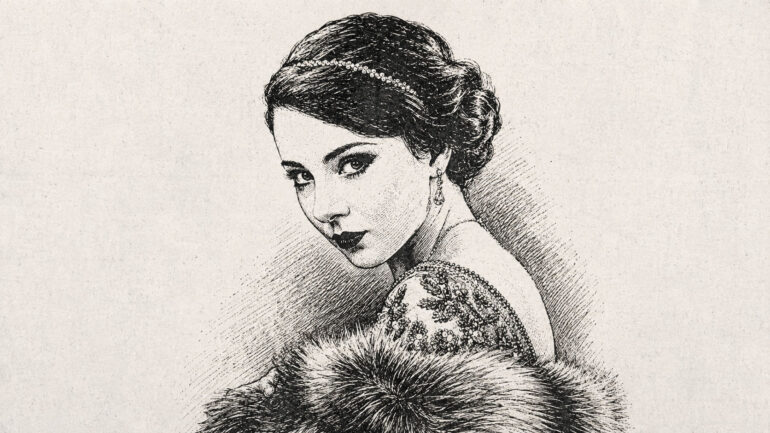
Megan Tremethick, the independent film publication D&CFilm recently noted that you are “often described by critics and fans as the ‘Vivien Leigh of indie horror’”.
That comparison has not arisen simply because you bear a resemblance to the celebrated actress, but because your performances, and the films you have directed, including Spoiling You, reflect a profound interest in the British classical acting tradition.
In particular, your work places considerable emphasis upon voice, language, textual interpretation and wordplay.
How important are these disciplines to an actor? What formal study or self-directed learning have you undertaken when preparing for your films and continuing to hone your craft?
Megan:
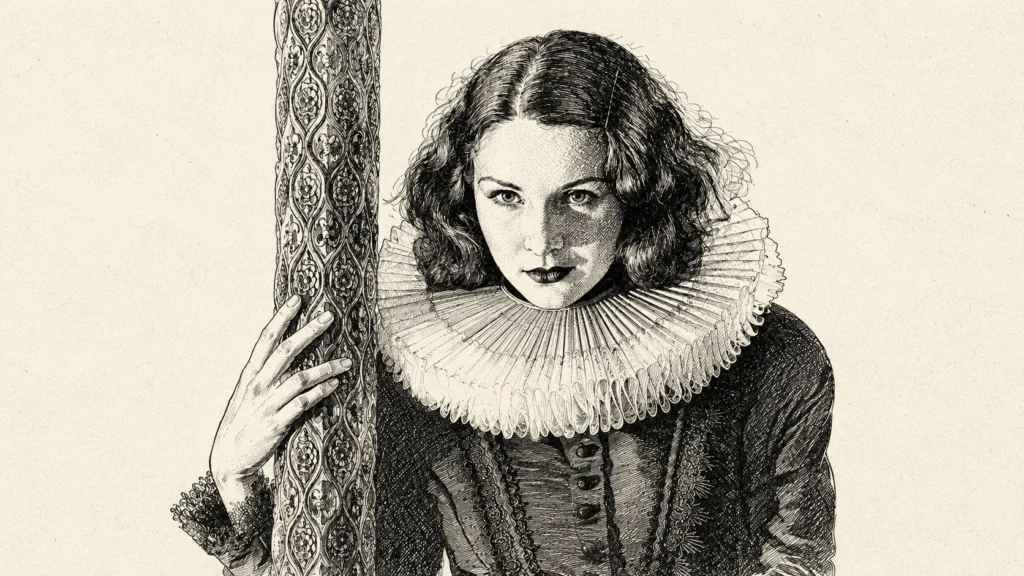
Well, I didn’t come from what might be described as a privileged background, and I fought my way towards the acting profession through college-level access training and an enormous amount of self-directed learning.
For me, popular culture did not provide an excuse for mimicry or a passive approach to my craft. The current fashion for detached, understated acting, with its constant refrain of “do less, do less”, was at odds with how I perceived human behaviour and with the performances I most admired in theatre and cinema.
This blandness and lack of colour are evident in a fair amount of mainstream acting. Within the horror genre, at least, actors playing more unusual characters are often battling against that orthodoxy. I think of performances such as Amy Madigan’s in Weapons, Inde Navarrette’s in Obsession, Essie Davis’s in The Babadook and Toni Collette’s in Hereditary, or indeed almost anything else she has appeared in!
By contrast, performances that lack emotional conviction and rely upon aloof detachment or irony often reflect, to me, a cautious creative ideal: a reluctance to express genuine vulnerability or emotion.
I believe self-directed learning is one of the most important tools available to any actor, especially those who can’t attend prestigious acting institutions full-time. I have been fortunate enough to undertake training with the Royal Academy of Dramatic Art, with a particular emphasis on voice, speech and elocution, alongside foundational work in preparing for a role.
This involved everything from practical exercises to the theories of Konstantin Stanislavski and Uta Hagen, as well as textual analysis. In some of the informal acting environments I have encountered, textual analysis has not always been given the emphasis I believe it deserves.
I have also studied Shakespearean performance at RADA under Geoff Bullen, developing my techniques for approaching and performing the works of William Shakespeare. The experience reinforced my belief that studying Shakespeare can benefit every actor, regardless of the genre in which they work. One of my long-term ambitions is to perform his work professionally, both on stage and on film. Among his plays, Macbeth, Richard III and Julius Caesar remain particular favourites.
As regards self-directed learning, I have taken a deliberately vintage approach, one that Vivien Leigh or Laurence Olivier might have approved of, or at least one consistent with aspects of the theatrical tradition in which they were trained.
The British Horror Studio has been keen to cultivate something of the classical repertory tradition associated with institutions such as the Old Vic. To assist me, the studio acquired a collection of elocution and voice-training books from the 1920s and 1930s, including Elsie Fogerty’s Speech Craft and The Speaking of English Verse.
These books reflect many of the speech conventions associated with early twentieth-century received pronunciation. They have been instrumental in helping me lend greater authenticity to my performances in the studio’s period-styled films.
One also helped me develop the transatlantic accent I required for the B-Team’s Chronicles of Depression, in which I co-starred with Ian McCulloch. As a former member of the Royal Shakespeare Company, Ian seemed to teach us something every time he spoke.
ACTING AS A LIFELONG DISCIPLINE
What Megan’s experience suggests is that the true division lies not between the formally trained and the untrained, but between those who regard performance as an evolving craft and those who do not.
The democratisation of technology has unquestionably opened doors that were once firmly closed. Independent film and theatre have benefited enormously from that expansion, uncovering actors and voices that might previously have remained unseen.
Opportunity alone, however, cannot replace study, reflection, technical discipline or the courage required to develop an individual artistic voice.
Perhaps the healthiest future for acting lies neither in defending the old institutions without question nor in dismissing them as irrelevant. It may lie instead in making serious learning more widely available, while preserving the belief that performance, however spontaneous or instinctive it may appear, remains an art worthy of a lifetime’s study.
About Mr Lawrie Brewster
Mr Lawrie Brewster is a producer and director with fifteen years of experience in independent horror cinema. He leads the British Horror Studio, serves as President of Amicus Productions, and oversees the British Horror Studio Community initiative.